Electrification
The EV value chain, from cells and power electronics to charging, financing and the fleets that go electric first.
What we believe
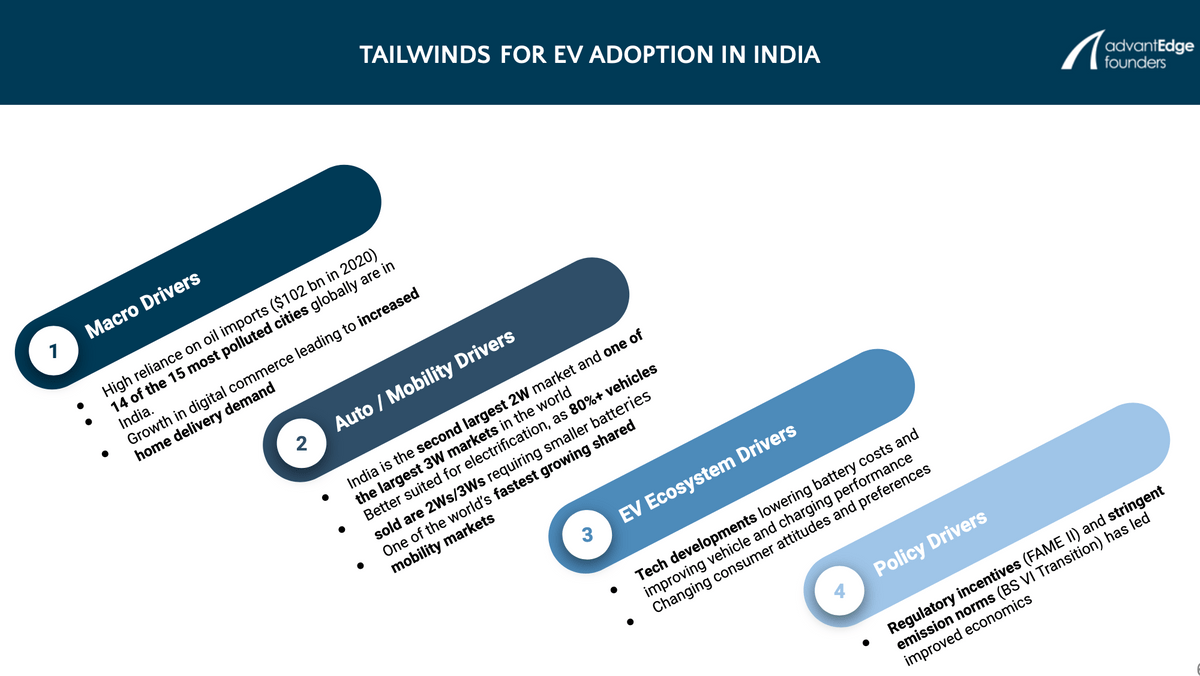
India's electrification is driven by total cost of ownership rather than by subsidy. Commercial two- and three-wheelers reached parity with petrol and CNG without incentives, which is why they electrified first and why the share of electric registrations is highest where vehicles work hardest. Cars and buses follow as battery costs fall and charging gets faster.
We have been investing along this chain since 2019: swappable low-speed scooters for gig riders (Baaz), rapid charging for commercial vehicles (Exponent Energy), battery-as-a-service for bike-taxi riders in Africa and India (Zeno), electric tractors (Moonrider), lease financing (Astranova), charging software (Pulse Energy) and now power electronics (Endless Machines).
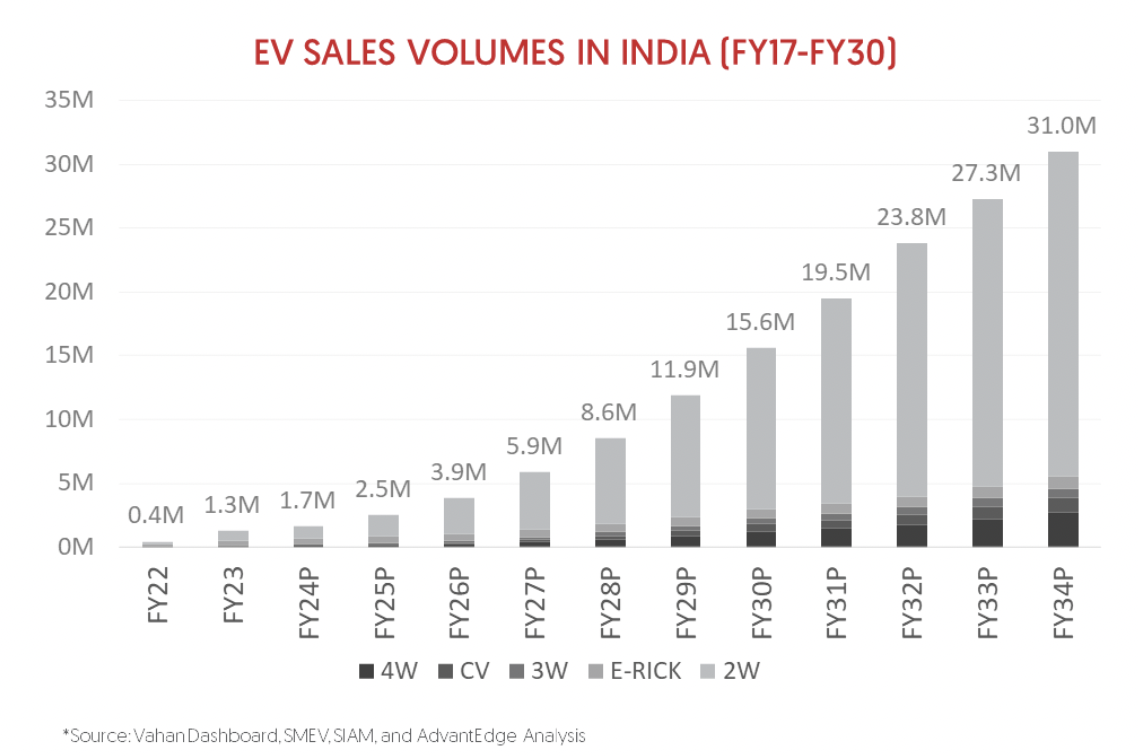
Source: Vahan registrations compiled by Autocar Professional (FY26: 24,52,921 units) and JMK Research; projection from AdvantEdge's 2023 thesis, kept for reference.
The long-range view we published in 2023 assumed a steeper curve than the one that has materialised. Registrations are growing at about 25 percent a year and the mix is what we expected: two- and three-wheelers first, cars accelerating from a small base, buses concentrated in public procurement.
Source: IESA (L5 three-wheelers above 31 percent; 8.3 percent overall), Autocar Professional (two-wheelers 6.54 percent), car share derived from 1,93,633 electric cars against roughly 4.5 million passenger vehicles.
What must happen next
Three things decide the next five years. First, the country has to make what it currently imports: cells are covered by the PLI scheme, but power electronics, the chargers, inverters and rectifiers in every vehicle and every charging station, are still almost entirely imported. Second, financing has to catch up with the vehicle: a lender who can read battery data underwrites a commercial EV better than one who reads a driver's paperwork. Third, the second life of the battery has to become a market, which needs diagnostics that grade a used pack in minutes rather than days.
Source: Vahan via Autocar Professional and Autoguide India; the middle bar is derived as total registrations less two-wheelers and cars.
| Form factor | Where it stands in FY26 | What decides the pace |
|---|---|---|
| E-rickshaw and low-speed three-wheelers | Lithium-ion replacing lead-acid packs | Financing and battery-swap networks |
| Passenger three-wheelers (L5) | Above 31 percent of new registrations electric | Rapid charging at commercial sites |
| Two-wheelers | 1.40 million units, 6.5 percent of the segment | Price parity after subsidy withdrawal |
| Light commercial vehicles | Early; fleet pilots | Range on a duty cycle, not on a brochure |
| Cars | 1.94 lakh units, up 91 percent from a small base | Model choice and home charging |
| Buses | Concentrated in state procurement | Depot charging and payment security |
Sources: Vahan via Autocar Professional and Autoguide India; IESA.
What we look for
- Components India does not make yet, with a supply chain the founder has already mapped.
- Charging and energy businesses where the fleet is the customer and utilisation is contracted.
- Financing and insurance models built on vehicle data rather than credit bureau files.
- Battery intelligence: state-of-health, warranty and resale for used commercial EVs is the gap we name most often.
What we pass on
Consumer vehicle OEMs. Charging networks built ahead of demand. Battery packs assembled from imported cells without a technology edge.
What we have backed here


Writing on this theme
Why we invested in Endless Machines
India makes electric vehicles and imports the power electronics inside them and inside every charging station. Endless Machines is building that layer at home, starting with a rectifier that survives the Indian grid.

Siliconindia: Kunal Khattar on Building Profitable EV Infrastructure

Outlook Business Escape Velocity ft. Kunal Khattar: Rapido's Unit Economics, India's Hardware Renaissance and China's EV Dominance
Battery intelligence: the missing layer in India's used EV market
India registers 2.5 million electric vehicles a year and has no trusted way to value the battery inside one. A grading standard for used commercial EVs would underpin resale, financing, insurance and second-life storage.

DRIVEN Episode 5 ft. Anoop Srikantaswamy: Can Electric Tractors Reach Diesel Price Parity?
Grid software: the layer India's energy transition has not yet built
Battery storage is being tendered by the gigawatt-hour, five crore smart meters are installed and distribution losses are falling. The hardware is being bought; the software that decides when it runs barely exists in India at seed stage.

Forbes India: Kunal Khattar on Where India's Next EV Value Will Be Created

Kunal Khattar in Forbes India: Why Commercial Mobility Is Driving India's EV Shift

DRIVEN Episode 4 ft. Sandeep Divakaran: Why EV Adoption in India Still Feels Broken

From Operator to Investor: Kunal Khattar on Building India's EV-First Future

ETAuto: West Asia tensions boost EV interest as adoption gathers pace

DRIVEN Episode 3 ft. Arun Vinayak: Can India Solve EV Charging?

The Core Report ft. Kunal Khattar: Why Electric Vehicles Are India's Biggest $1 Trillion Opportunity

DRIVEN Episode 2 ft. Anubhav Sharma: Inside Baaz's EV Ecosystem

Outlook Business: India Can't Copy China's Playbook to Become an EV Hub

Inc42: Will 2026 Be The Year India's EV Market Turns The Corner?

DRIVEN Episode 1 ft. Prashant Kumar: India's EV Future, Building Zingbus and $10M Funding Secrets
In the inaugural episode of DRIVEN, AdvantEdge Founder Kunal Khattar rides with Zingbus Co-Founder Prashant Kumar to discuss the future of EV mobility in India, how to scale a startup, and the secrets behind their $10M funding.

Why AdvantEdge is Backing Bike Taxis and Delivery Scooters, Not Private Electric Cars

GrowthCast by Shashank ft. Kunal Khattar: Why EV is the Future in India?

GrowthCast by Shashank ft. Kunal Khattar: Why You Should Seriously Consider Buying an EV in 2025

GrowthCast by Shashank ft. Kunal Khattar: EVs vs Petrol Explained

TechCrunch: Tesla loses its charm for India's loyalists even as Musk finally delivers

The Core Report: Rare Earth Crisis, Can India Build EVs Without China's Critical Magnets?

India Tech Report: Ending the ICE age, Kunal Khattar on the trillion dollar opportunity in India

Outlook Business: India's Green Commute Slows Down as EV Cabs Lose Spark

The EV Journey Through Rural Lens

ThePrint: Has India lost the EV race? Sales figures say so

Inc42: Do Indian EV Startups Stand A Chance Against The Legacy Players?

The Real Bottleneck In EV Adoption

ThePrint: Delhi's EV policy is too ambitious. CNG autos, commercial vehicles will take a hit

YourStory: Inside India's new EV manufacturing policy of reduced tariffs and global players
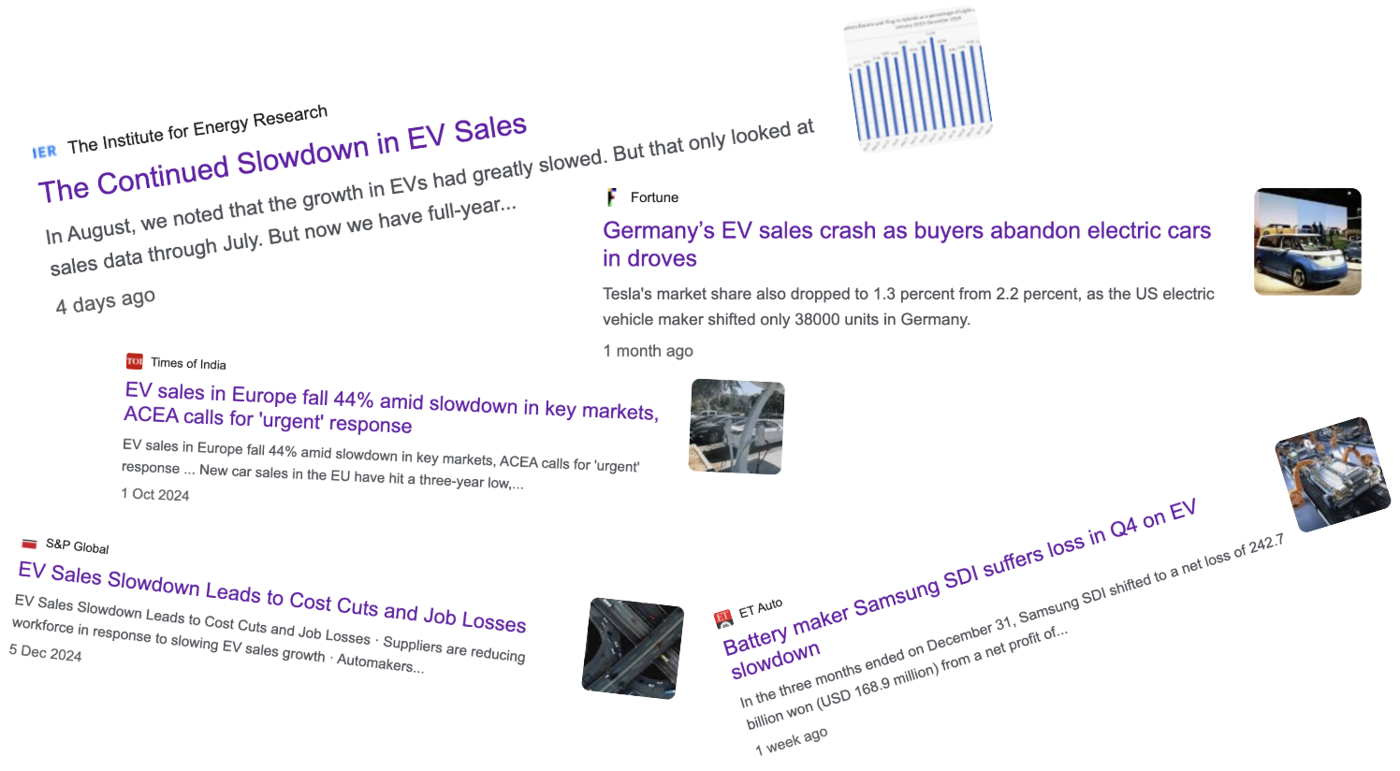
The Truth About EV Sales and Why the Future is Still Electric
An in-depth look at electric vehicle sales data across key geographies to understand where we stand in the EV transition journey.
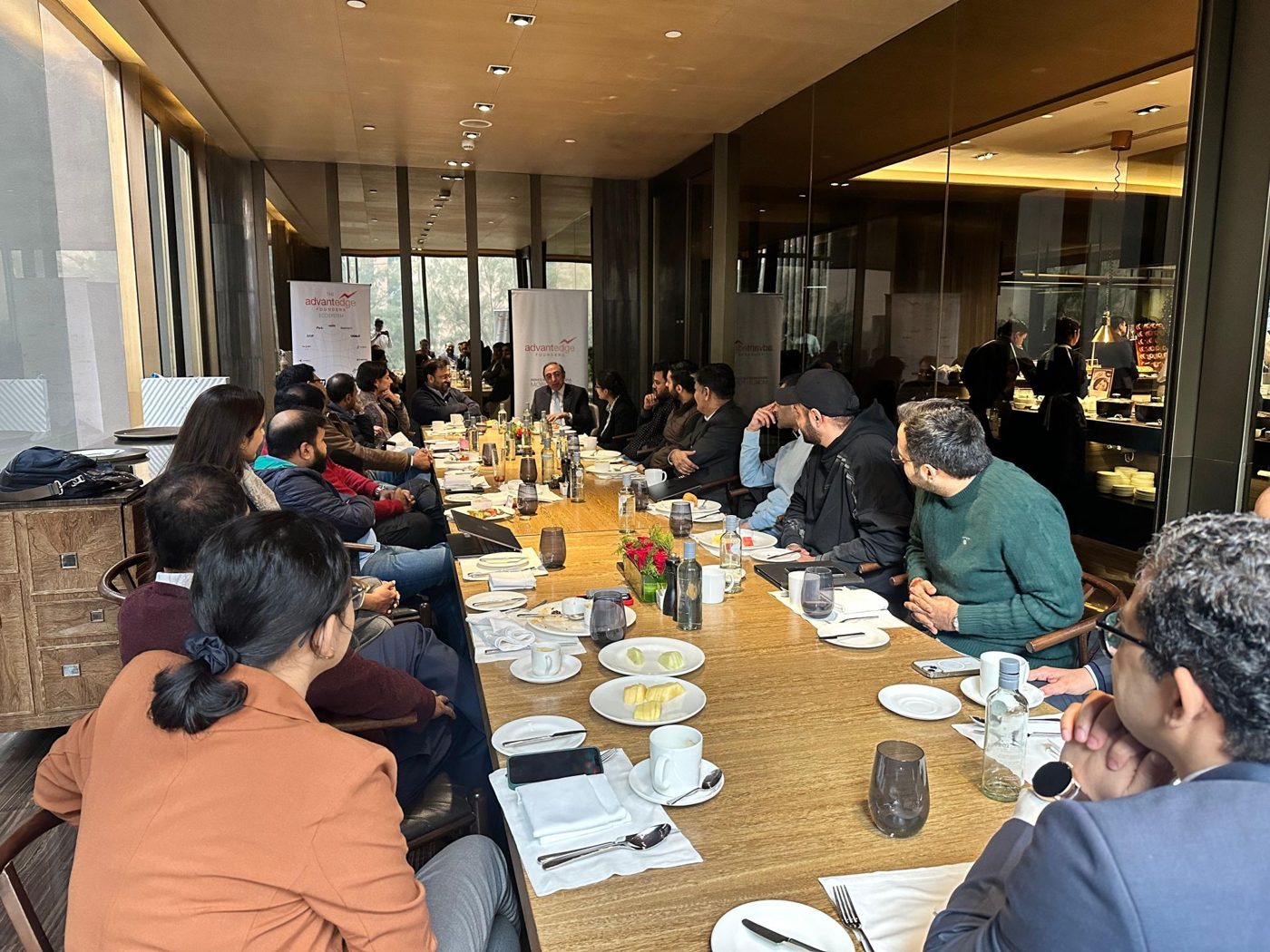
EV Financing and Building Unicorns: Insights from the AdvantEdge Breakfast Roundtable
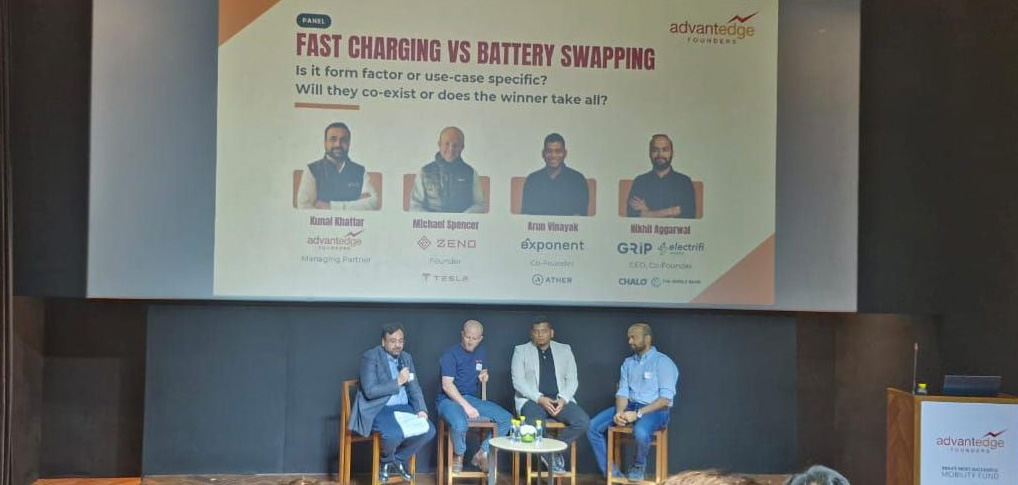
AdvantEdge Founders Annual Mixer 2024: EV Leaders Debate Fast Charging and Battery Swapping
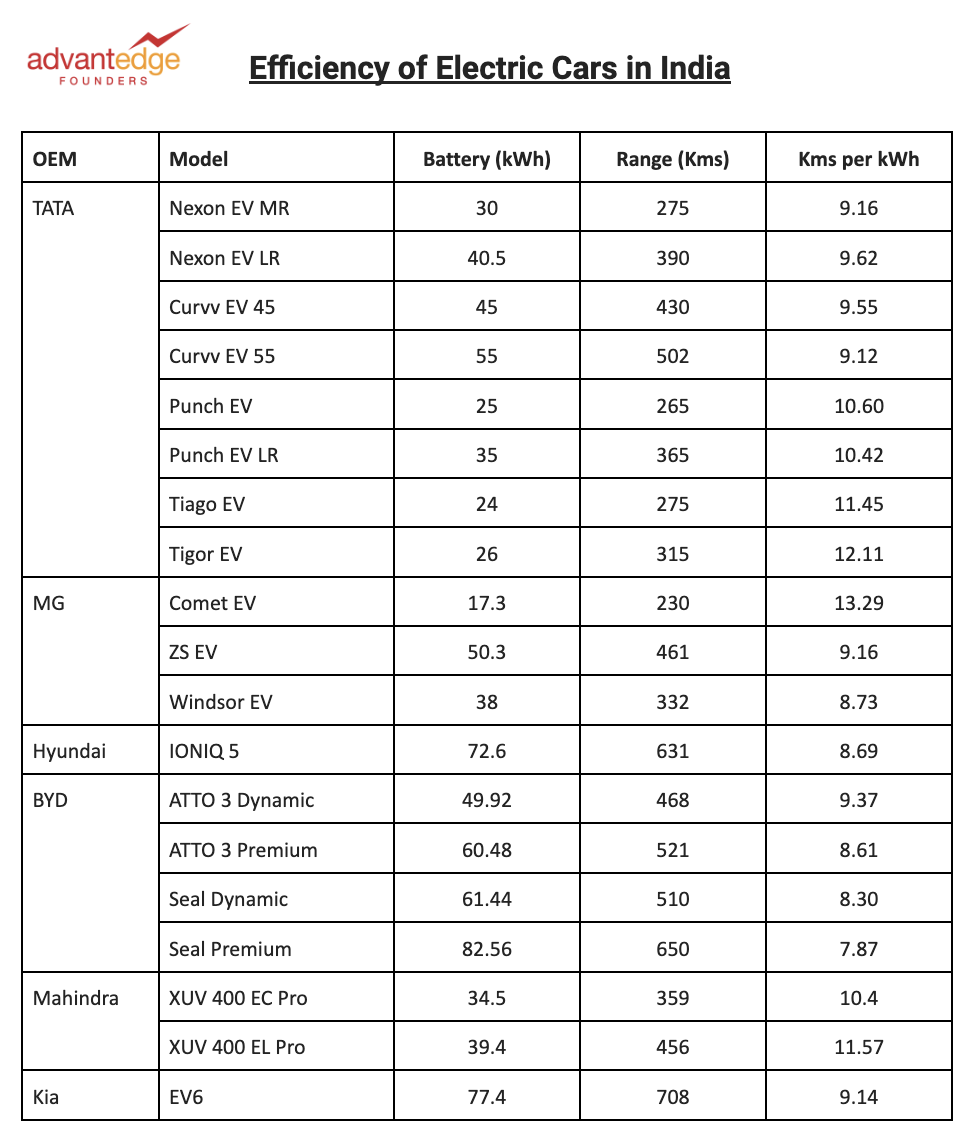
Watt's the Efficiency? Powering India's Electric Cars
Given India's obsession with fuel efficiency, making electric vehicles efficient is not just a technical necessity, but a cultural imperative.
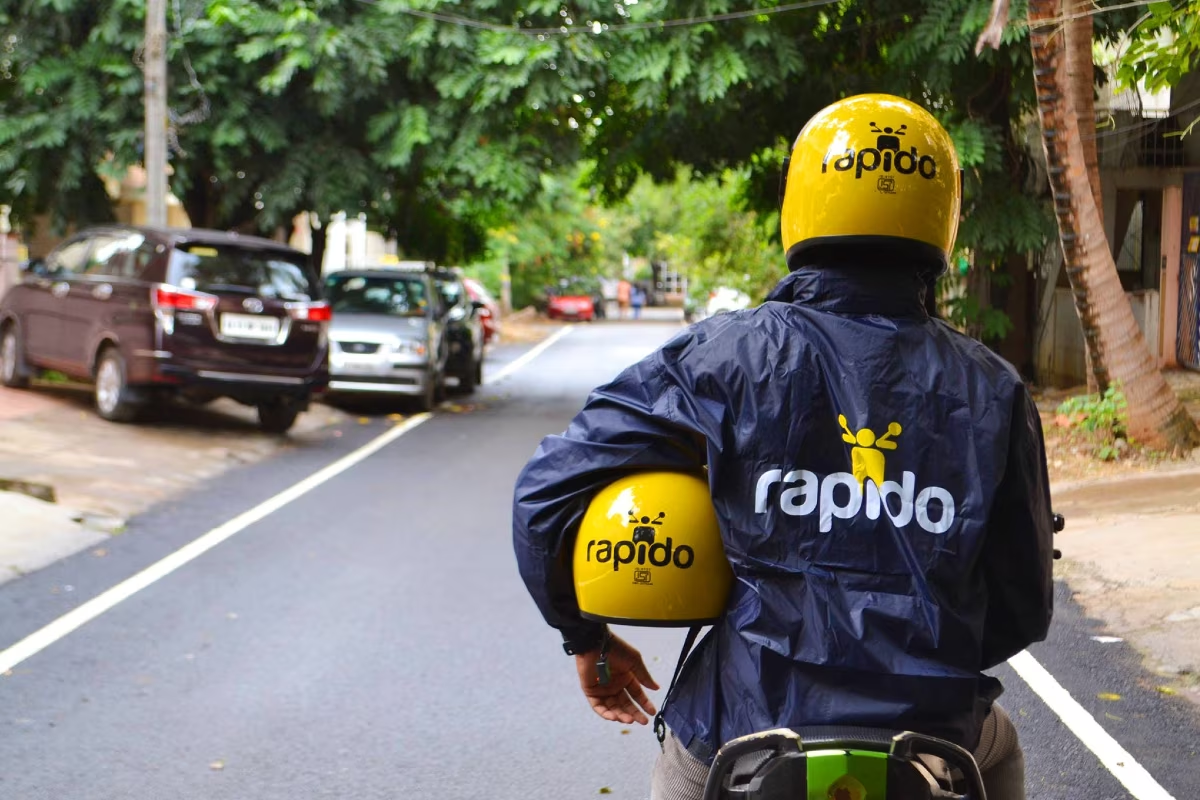
Fleet electrification needs to lead India's EV push
An electric fleet will not only make the business sustainable for logistics and shared mobility companies, but it will also lead to higher overall profitability.
Can we charge up our domestic EV manufacturing?
We have ridden the electric dream past the petrol pumps, but import dependence remains a big speed bump.

YourStory: The right way to foster the Indian EV ecosystem

Forbes: Innovations will make EVs cheaper than ICE Vehicles

IVCA: Transition from ICE to EV, a $1 Trillion Investment Opportunity

Forbes India Startup Fridays: Kunal Khattar on how the best is yet to come in India's EV sector

FAME II

Times of India: Storage, the next energy revolution

AdvantEdge Mobility Podcast: EV Financing in 2023
Inc42: How Lithium Deposits Can Build India's Electric Vehicle Stack

Will Battery Swapping Models For EVs Succeed in India?
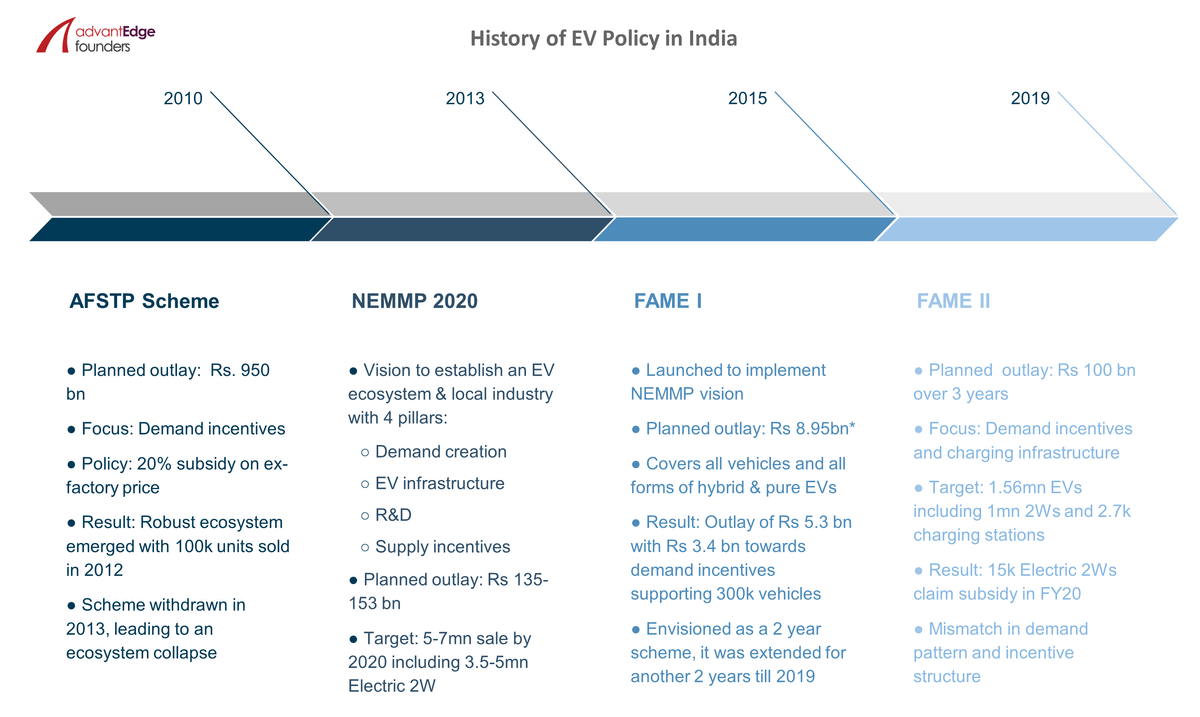
Has Indian Electric Vehicle Policy Failed to Deliver, and What is the Way Forward?
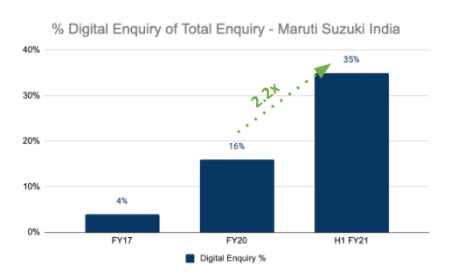
How Car Dealerships Will Evolve in India

AdvantEdge Mobility Podcast: Tesla is Entering India
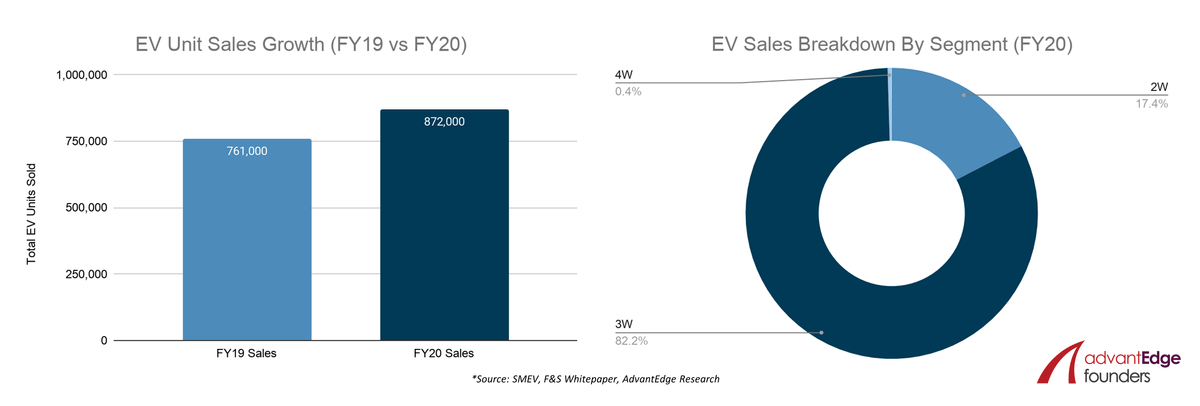
Insights into the Electric Vehicle Market and Emerging OEM Landscape in India
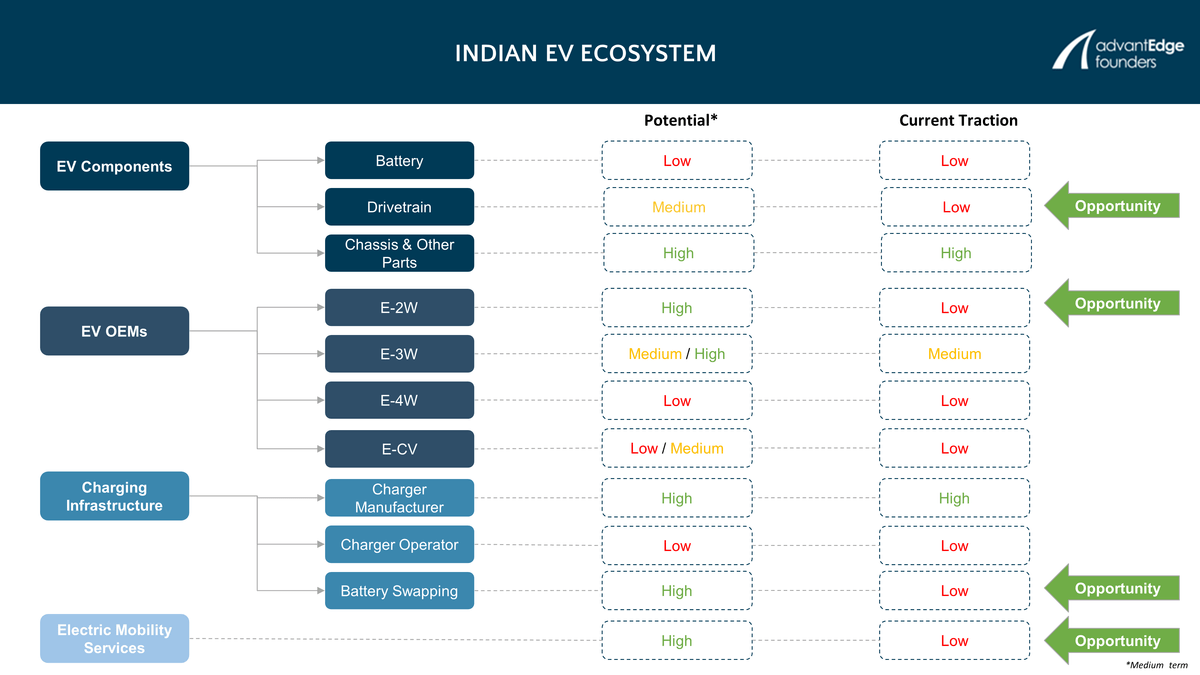
Where are the Opportunities in the Indian EV Ecosystem?